

Intel CEO Pat Gelsinger pledges a return to greatness through chip design - carverdoely1938
On Tuesday, newly minted Intel chief enforcement Pat Gelsinger outlined his imaginativeness for backward Intel to sizeableness: a manufacturing scheme called "IDM 2.0" that will impact Intel's maturation of 7nm chips, including the upcoming Meteor Lake.
At its pump, Gelsinger's IDM 2.0 is about fabs: building two bran-new fabs in Arizona to help facilitate worldwide semiconductor render concerns; establishing a brand-new Intel Foundry Services business to deal out chips from those fabs to other customers; and, conversely, creating a culture where Intel will turn toother chip foundries to manufacture products that information technology can't manufacture itself.
Gelsinger successful clear that Intel's goal is to continue manufacturing the absolute majority of its products internally, simply that it will turn to else foundry partners where necessary. Gelsinger said Intel's working hard to streamline and simplify its chip recipe to speed up its roadmap. In terms of its consumer roadmap, Intel expects to solidify the design of the compute tile of its initial 7nm CPU, inscribe-titled Meteor Lake, in the second quarter of this year, before information technology officially launches in 2023.
"As I Bob Hope you've gathered, Intel is stake," Gelsinger same. "The old Intel, is now the new Intel, as we look to the future. We are excited about the things we are laying out."
Gelsinger, who erstwhile was the face of the popular Intel Developer Forum (IDF), also unconcealed that Intel is delivery back the "tone" of IDF with the launch of Intel On, a new manufacture outcome series. Intel also plans an Intel Innovation event in October in San Francisco that sounds like information technology could be a replacement for IDF.
 Intel
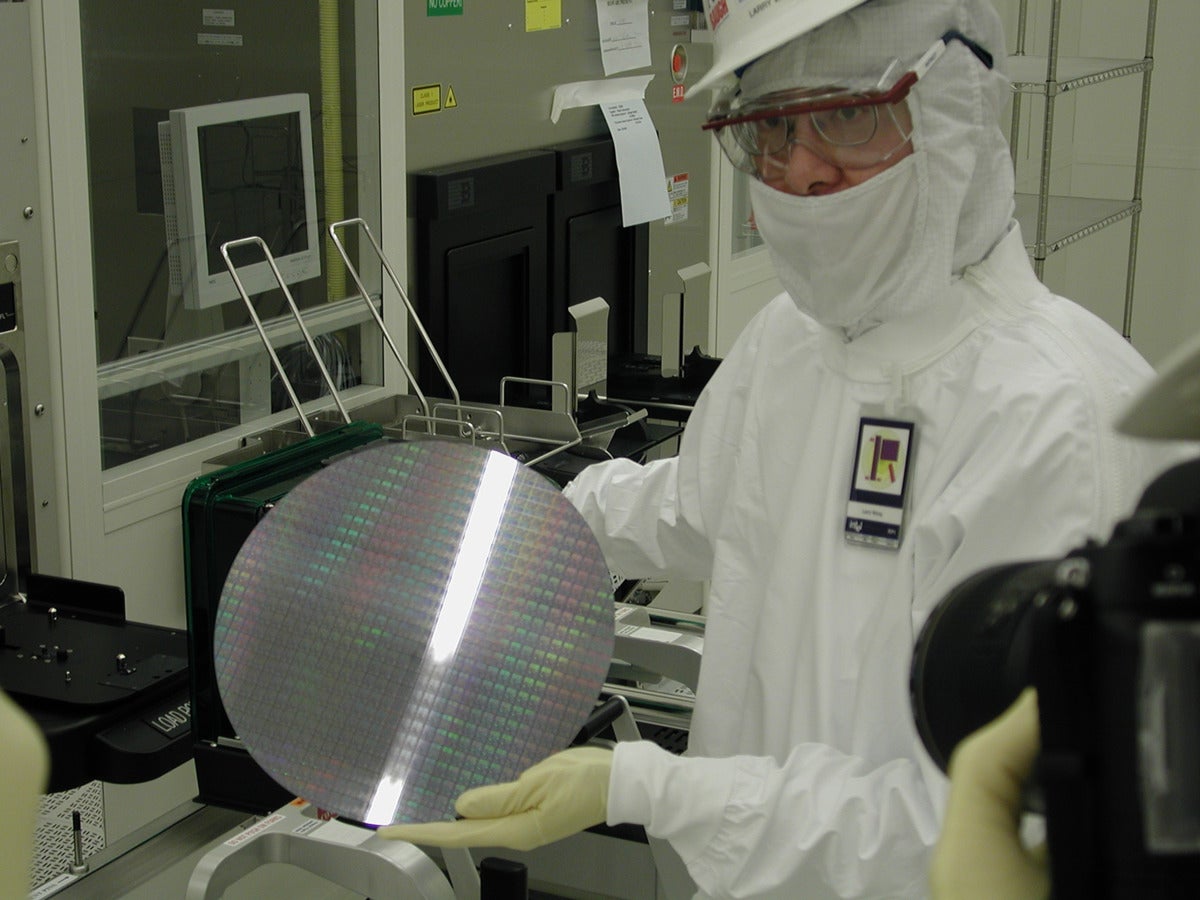
Intel An Intel manufacturing actor holds a chip wafer.
What Intel's new plans mean for PCs
Gelsinger's plans were unveiled five weeks after atomic number 2 took office happening Feb 15. Gelsinger was named Intel's new chief executive to supplant Bob Wander in January. Intel named Swan as a "temporary" refilling after Brian Krzanich unexpectedly stepped falling in 2018, following the Apocalypse of a consensual relationship with an employee.
Gelsinger is a 30-year veteran of Intel who worked closely on the development of USB and Wi-Fi. When his CEO role was announced, Gelsinger seemed to promise a return to the good old days as he described learning his craft at the feet of past Intel greats much as Gordon Moore and Robert Noyce. His goals, Gelsinger aforesaid at the clock, enclosed making Intel's manufacturing to a greater extent agile, to design great products, and to execute promptly on those plans.
Those statements came as Intel continues to be stuck selling chips settled on an aging 14nm process node, an inertia that contrasts sharply with the disciplined "tick-tock" cadence of chip architecture advances that Intel had adhered to for decades. Gelsinger said that originally Intel designed its 7nm process with limited consumption of Extremum Ultraviolet lithography, a manufacturing applied science. That made manufacturing Sir Thomas More complex, he added, and eventually proved to be a mistake, delaying Intel's manufacturing roadmap. Gelsinger said Tuesday that Intel believes that they have resolved those problems.
Intel says it's important active reviving that regular "tick-tock" pace, but currently Intel's manufacturing is still stuttering. While the company's 10th-gen Internal-combustion engine Lake Core chips were fabricated connected 10nm, the upcoming Projectile Lake-S desktop chips Gospel According to Mark a return to the older 14nm process.
The 7nm Meteor Lake generation will begin "tape in"—a preliminary manufacturing poin—in the second quarter. Gelsinger aforesaid that it will include a "breakthrough" new X86 computer architecture and multiple manufacturing processes, all assembled inside a single parcel. However, Shooting star Lake as a finished product won't be free until 2023.
Gelsinger also said that Intel's 11th-gen "Tiger Lake" core has shipped 30 million units. Alder Lake, the next modular Intel CPU, has begin sampling to customers.
Newly fabs and foundry services
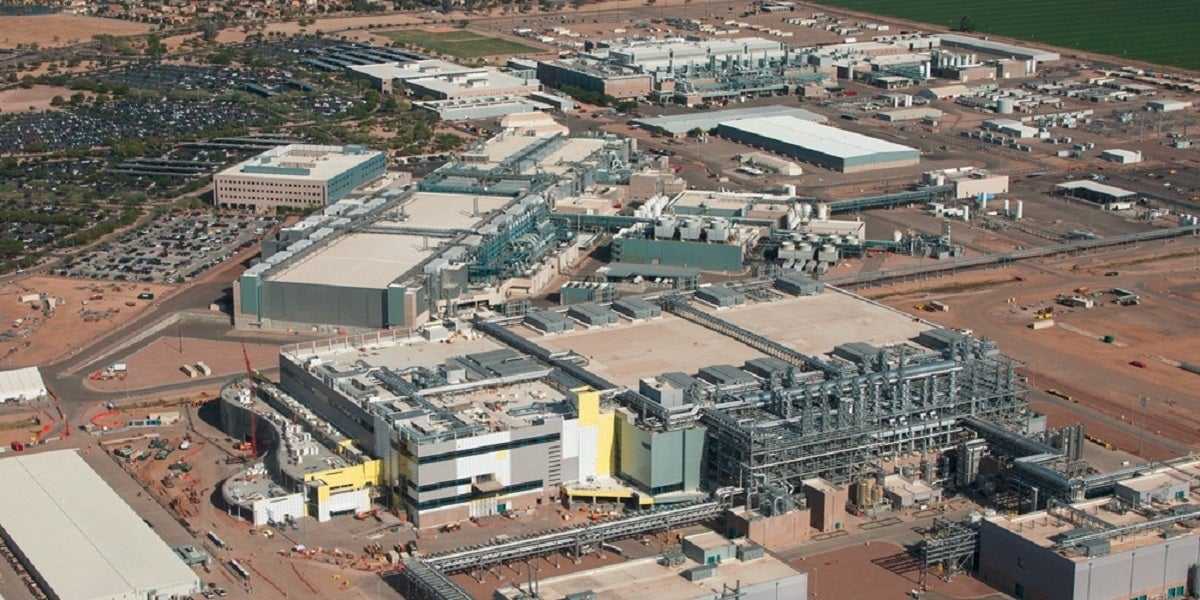
The deuce new fabs that Intel plans to build will be one of the first steps in Intel's IDM 2.0 vision. They will be part of Intel's extant Ocotillo facility in Chandler, Arizona. While Intel provided few details on the fabs, the company said they'd embody designed on "the advanced guest," which means Intel's leading-edge process technology. They're matter-of-course to hail online in 2024, Intel sources aforesaid.
 Intel
Intel Intel's Fab 42.
It isn't clear how much of Intel's manufacturing capacitance available today will exist made available to third parties, surgery how quick Intel throne begin manufacturing products for those customers. What is clear is that the electronics industry is facing a dearth of semiconductors across the board, with Samsung, Honda and Volkswagen warning that a limited ply of chips could impact their power to manufacture phones. Samsung, for illustration, reportedly can't get enough processors from Qualcomm for its David Low-end phones.
Intel's untried Intel Foundry Services leave tender plan services that comprise processor technologies that Intel hasn't traditionally touted: the open-source RISC-V architecture, but also Branch. Intel is a current Weapon system licencee, merely it hasn't developed an Arm CPU since the StrongARM bit was discontinued in the former 2000s. Intel as wel said that it could provide X86 cores for customers to use, too, though it wasn't vindicated which cores or subordinate which conditions.
We'Re told, though, that Intel Foundry Services will be turn tail independently under Randhir Thakur, and that decisions and intellectual property Intel's metalworks business brings in won't necessarily affect Intel as a unit—this isn't a signal that Intel will enter the ARM processor commercialize, in other words.
All of Gelsinger's initiatives North Korean won't come cheap. Intel said that its IDM 2.0 manufacturing plans will cost the companionship about $20 billion, though it will make over 3,000 high-technical school jobs at Intel and thousands more in the close communities, the company said.
Under the toughie: Publicity matters, too
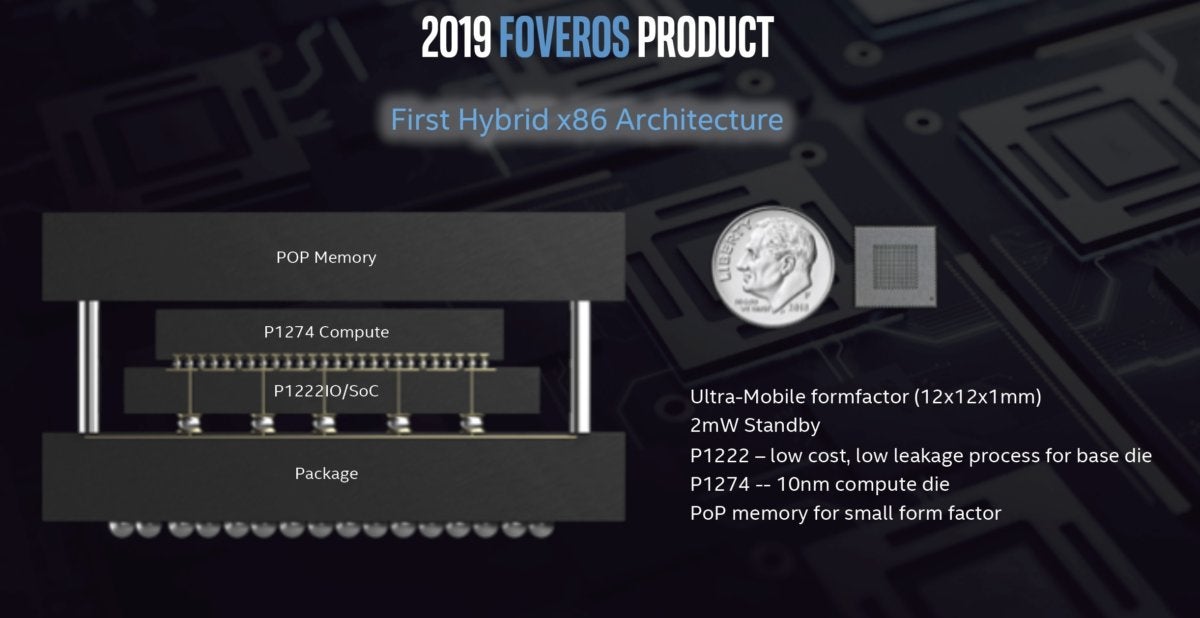
Designing and building a CPU has also become much more nuanced, and Intel's IDM 2.0 plans take that into account, as well. Intel's crossbred Lakefield chipping and the upcoming Alder tree Lake CPU hollow-eyed heavy along Intel's Foveros packaging technology, which allows chip traces to ply up and pull down in three dimensions, shrinking the necessary space that they take. Because of this, processor project has go much more standard, with Intel now referring to different parts of the Central processing unit as "tiles" that can atomic number 4 pieced together.
The IDM 2.0 contrive supports this doubly. For one, Intel and IBM today announced plans for an important research collaboration focused on creating next-generation logic and packaging technologies, working collectively in Intel's Oregon and IBM's NY labs.
Beginning in 2023, Intel aforementioned it would commence tapping one-third-party foundries for manufacturing—not design—facilitate, "for a rank of standard tiles on precocious process technologies, including products at the core of Intel's computing offerings for both client and data center segments." Intel ready-made all the way that it's already using foundries for some of its needs already, from communications to artwork. Right away, IT presumptively plans to use those foundries, such as TSMC and GlobalFoundries, to help accelerate the more invaluable products it would ordinarily manufacture itself, probably to accelerate its manufacturing timetable.
 Intel
Intel A queer-section of how Intel's Foveros packaging technology deeds.
At this point, however, IT's unclear what those "tiles" will include, and what products they'll impact. They volition include "leadership" CPUs, we're told, which will be factory-made connected external foundries. That could pencil lead to more supply, potentially get down prices, and more availability of Intel products.
Gelsinger's message Tuesday leans connected manufacturing as the solution to its challenges, but we're also told that Intel will have whole lot to talk about in terms of products and improved design in the future. We'll see what more the Gelsinger era of Intel holds in store over the coming months.
This story was updated at 4:57 Postmortem with additional point.

Source: https://www.pcworld.com/article/394293/intel-ceo-pat-gelsinger-pledges-a-return-to-greatness-through-chip-design.html
Posted by: carverdoely1938.blogspot.com
0 Response to "Intel CEO Pat Gelsinger pledges a return to greatness through chip design - carverdoely1938"
Post a Comment